Insight / AI and infrastructure
Published
Consumer GPUs and the future of personal compute
Why local AI capability is growing while driver, operating-system and service dependencies still threaten the useful life of personal hardware.
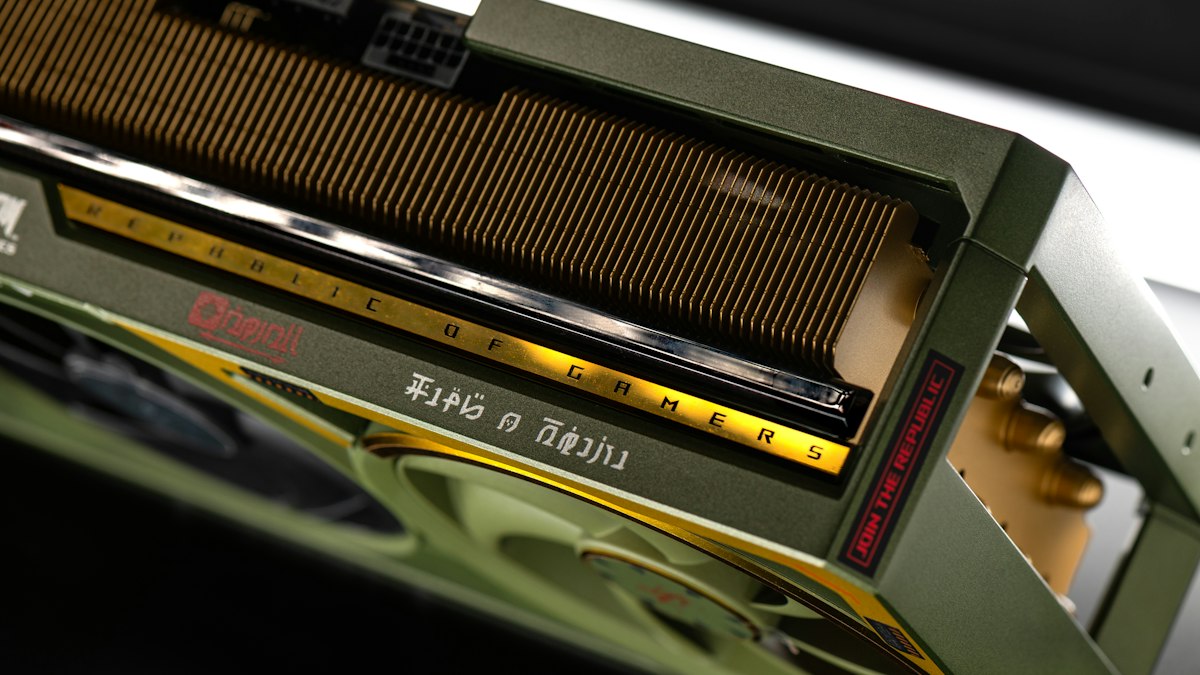
Consumer graphics cards have made substantial local computing possible for individuals and small teams. A developer can run a private model, inspect its behaviour and build a workflow without asking a provider to process every prompt. That capability matters for learning, experimentation and businesses that need control over sensitive data.
At the same time, ownership of a card does not guarantee permanent access to every software path that makes it useful. Drivers, operating systems, model formats and hosted services move at different speeds. It is reasonable to ask whether an industry with strong incentives to sell hosted inference will continue to support personal compute well. It is not evidence, by itself, that any particular company is deliberately disabling a device to force subscriptions.
The capability is real, but the stack is larger than the card
The GPU’s advertised memory and compute are only part of a working AI system. A model also depends on a compatible runtime, driver, operating system, enough RAM and storage, the right license and a way to test outputs. llama.cpp supports a range of hardware backends and CPU–GPU hybrid inference, which helps widen local access. Specialised engines such as Strata explore other trade-offs for selected large models and consumer machines.
This is a welcome expansion of what a person can do on their own equipment. It also means the useful life of a card depends on software maintenance. A model format can become common while an older GPU backend loses attention; a new runtime release may need a newer driver; an operating-system upgrade can affect a previously working tool. Plan for those dependencies when buying hardware for a business process.
Support windows are design decisions
NVIDIA documents distinct driver branches and support periods for its data-centre products. Its GeForce security-update releases show that some older families may receive security fixes after leaving the Game Ready feature path. Those policies are not identical across product lines, and the exact device and driver branch matter.
Operating systems set another boundary. Microsoft publishes Windows 11 hardware requirements, including TPM and processor requirements. A machine that runs an older system today may not have the same supported upgrade path tomorrow. A secure operating system and driver stack are essential when local models process confidential data, so “just stay on the old version” is not a complete plan.
Before buying a card for a multi-year workflow, check the vendor’s driver support policy, the runtime’s supported backends, replacement availability and the cost of operating the whole workstation. Keep a tested rollback image and a second route to complete essential work when a driver update causes trouble. Our performance checklist explains how to record the version and thermal conditions that make a benchmark reproducible.
Watch for lock-in without inventing motives
Hardware features may be exposed differently across product lines, drivers and software licenses. Cloud services may offer convenient capacity, managed operations and collaboration that a single workstation cannot. Those offerings can be valuable. The concern is narrower: if a workflow becomes impossible to export, reproduce or operate independently, a customer loses negotiating power even if they own the underlying files or card.
Ask practical questions. Can the model weights be lawfully downloaded? Can the application call a documented local API? Can you export evaluation data and prompts? Does a feature require a particular account or subscription? Can you run an older supported version securely while testing a replacement? These questions make vendor dependence visible without attributing an unproven intention to a vendor.
Compare costs over the useful life of the work, not just the purchase week. A local card has an upfront price, electricity, cooling, replacement parts and staff time. A hosted API has recurring usage charges and may reduce maintenance work. Either may be cheaper depending on demand, response time and the cost of a failed answer. A hybrid plan can reserve local capacity for sensitive or predictable work and use hosted capacity for peaks, provided the data rules permit it. Put those assumptions in a spreadsheet and revisit them when usage changes.
Security is part of this independence. Old drivers can have vulnerabilities; updates can fix them and also change behaviour. Neither automatic updates with no testing nor permanent refusal to update is a sound operating policy. Use a staged update, a known-good image and a test suite for the local workload.
Keep local compute a viable option
There is no single policy that guarantees access to personal compute. Teams can make progress by favouring documented interfaces, portable model formats, open runtimes where appropriate, independent backups and measured alternatives. Public benchmarks should include consumer configurations and disclose the full setup. Buyers can ask for support horizons and export paths before procurement.
If a system must scale beyond one machine, shared compute can be designed around clear ownership and governance rather than a vague promise of a collective GPU pool. If a model hub changes ownership, maintain a model-artifact exit plan. The aim is a choice: local when local fits, hosted when hosted fits, and the ability to move between them without losing the work.